Artusi’s Polpette

By Ian MacAllen on Tuesday, August 9th, 2022
Italian meatballs were very different than American meatballs, and rarely served with spaghetti and red sauce.

Italian meatballs were very different than American meatballs, and rarely served with spaghetti and red sauce.

Italian celebrity chef Carlo Cracco created quite a stir when he suggested a secret ingredient his version of Spaghetti alla Amatriciana. He added garlic.

An early version of eggplant parmigiana from the 19th century, published in dialect, Molignane alla parmisciana is perhaps the first evidence of the origin of the modern dish.
This vodka and cream sauce comes from an American cookbook, but based on recipes collected in Italy.
Il Cucchiaio D’Argento was a massive volume of Italian recipes published in post-war Italy, and quickly became the kind of classic given to young couples as a wedding present.
Ada Boni’s The Talisman Italian Cook Book is a classic of pre-war Italian cooking. When Metilda la Rosa published a post-war translation in English, it included a few additional recipes.

The Salsa del Papa, known as the Pope’s sauce but unrelated to the Vatican, is a loose marinara similar to Puttanesca sauce published by Pellegrino Artusi, the famous literary critic.
The Academia of the Italian Kitchen was established in 1953 as a gatekeeper for historic Italian recipes.
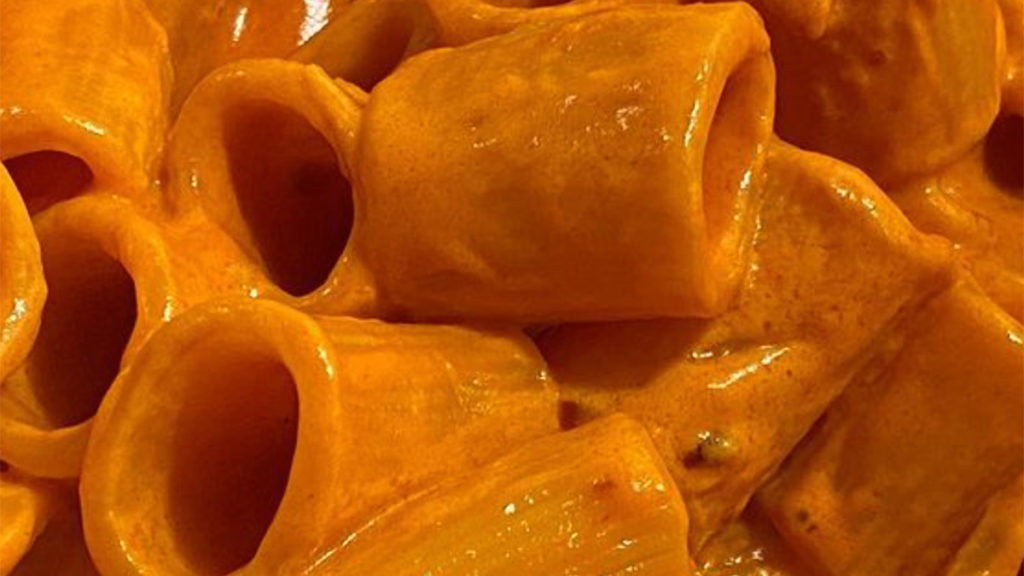
Dante’s of Bologna, a night club in the Italian city, served pasta with vodka sauce to late night partiers. Vodka was not common in Italy until the 1970s.
Post-war America was suddenly enthralled with Italian food and Maria Lo Pinto capitalized on this with The Art of Italian Cooking, a collection of recipes that helped introduce Italian and red sauce cuisine into homes across the country.
Powered By

© 2020 - 2026 Copyright:
Ian MacAllen
No part of this site may be used for training Artificial Intelligence or included in an A.I. database.
