
American Alfredo: How One Simple Dish Became the Flavor of Everything
By Ian MacAllen on Thursday, February 26th, 2026 at 6:10 pm | 2,706 views
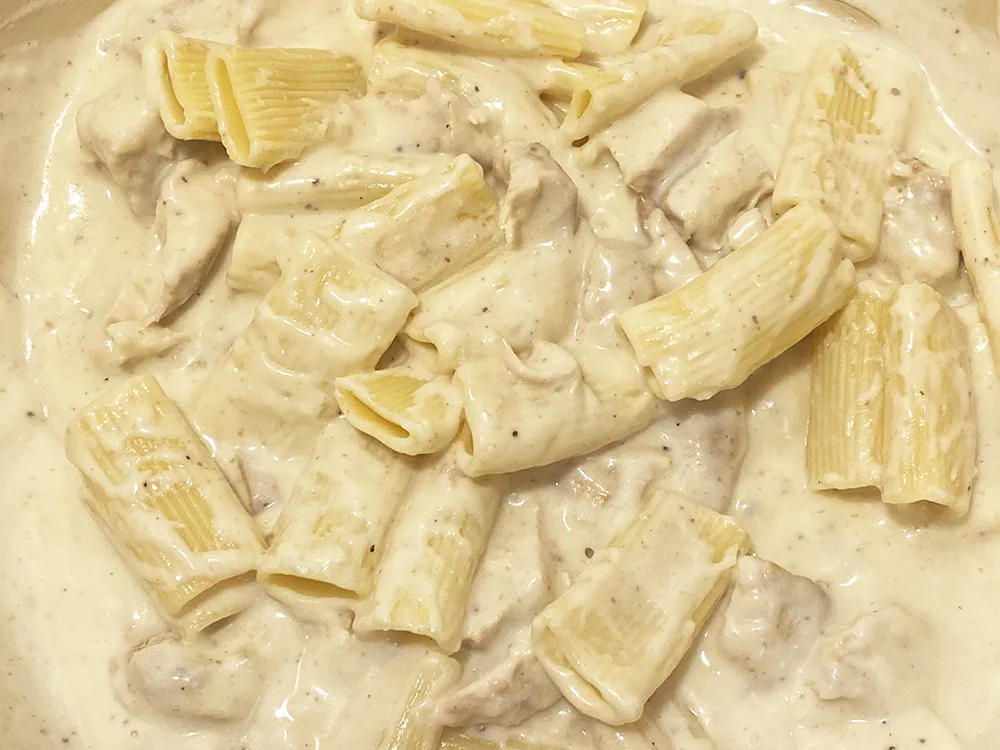
Fettuccine Alfredo is a classic pasta dish invented in Rome, yet many Italians today will deny Alfredo sauce even exists in their country. That’s probably because Americanized Alfredo sauce became far more than a condiment to fresh egg noodle pasta.
American Alfredo sauce is a complicated dish made with Parmesan cheese, cream or milk, and often additional dairy products. Some variations even include spices or flavors like garlic or bacon. These iterations are far from the original.
Italians have a long standing tradition of pasta al burro, meaning a pasta served with butter. Traveling with small children in Italy is made easier knowing nearly every restaurant will offer some version of this simple dish, typically topped with a grated hard cheese like Parmigiano-Reggiano, Grana Padano, or Pecorino. Other variations in italy are known as pasta al doppio burro, a pasta made with double, or extra butter.
The original Fettuccine Alfredo is based on this simple sauce, and sometimes is referred to as pasta al triplo burro. The dish was invented by the Roman restauranteur Alfredo di Lelio around 1908. That year, his wife gave birth to their son Armando (who would later take on the moniker Alfredo).

After Ines gave birth, she struggled to recover from the pregnancy. Looking to help her gain her strength back, Di Lelio fed her simple pasta with butter and cheese, and hoping to boost her calorie intake, made the fresh pasta using extra egg yolks. The additional yolks turned the pasta a golden yellow color.
The golden pasta also got a boost from extra butter and cheese, creating an emulsion that was creamy without cream, and the simple dish helped his wife regain her strength. Ines recovered, and it was she suggested he add the dish to the menu sometimes around 1910 or 1912.
The original Fettuccine Alfredo became a signature dish of the restaurant, not just because of the luxurious creamy texture but also the presentation. Di Lelio prepared it tableside, combining the pasta with the butter and cheese in a theatrical production accompanied by musicians. His bombastic personality attracted celebrities and politicians. Di Lelio’s restaurant was located in the heart of Rome, and created an experience that was turned into a legendary destination.
Alfredo Becomes a Legend
The restaurant caught the attention of American food writer George Rector. Rector had been a restaurateur himself until prohibition sank the market, and he started writing food columns and cookbooks. Rector visited Rome and found Di Lelio’s restaurant, and fell in love with the original Fettuccine Alfredo.
Rector returned to the United States with the recipe and included it in his Saturday Evening Post column in 1927, as well as The Rector Cook Book. He became an evangelist for the true Alfredo sauce, a simple mixture of cheese, butter, and a dash of starchy pasta water.
About the same time, Hollywood stars Douglas Fairbanks and Mary Pickford married and visited Rome during their honeymoon. The pair ate at Di Lelio’s restaurant – some accounts claim every night of their stay – and before leaving, gifted Di Lelio a golden spoon and fork for preparing the pasta Alfredo. These utensils are still part of the mythology today.
By 1943, Alfredo Di Lelio sold his restaurant, choosing to retire, while his son Armando, who took on the name and created a personality around the identity Alfredo, continued working at the restaurant, Alfredo Alla Scrofa. The second Alfredo continued the larger than life persona like his father, and was well known among celebrities.
Then, seven years later, the Catholic church announced a jubilee celebration in Rome. With millions of pilgrims expected to visit, Di Lelio saw an opportunity that he couldn’t pass up. He opened a new restaurant, Il Vero Alfredo, just a few blocks from the first. Eventually, Armando left to take over Il Vero Alfredo, and now a third Alfredo, Armando’s son, and sister Ines Di Lelio. Both Alfredo restaurants are still cooking today, and both claim to be home to the original Alfredo. Of course what is served in Rome hardly resembles American Alfredo sauce.
The Post-War Alfredo
Fairbanks and Pickford returned to the United States following their honeymoon. At parties, they served the Fettuccine Alfredo based on the recipe from Rome, either having acquired it from Di Lelio or from Rector’s Saturday Evening Post column. Between the Hollywood starlets and Rector, Di Lelio’s story became embedded in the zeitgeist of the perception of Rome. By the 1950’s, Alfredo’s of Rome had grown by mythical proportions. Magazines targeting American housewives casually mentioned Alfredo’s in Rome as though it was the only restaurant in the city. In many ways, Alfredo’s dish and his restaurant, offer the quintessentially successful brand building case study.
So ingrained was the mythology that even Kraft made reference to the restaurant in an ad for their pre-grated parmesan cheese. What’s notable about Kraft’s ad from a 1959 issue of Women’s Day, is that it holds true to Alfredo’s original while substituting in Kraft’s products.
The Kraft recipe includes preparing noodles, melted Parkay Margarine and Kraft’s pre-grated Paremsan Cheese. Sure, this isn’t going to produce the rich and creamy delight of the original, and margarine is never going to have the same sweetness as extra creamy butter, but unlike other Americanized recipes that would soon show up, Kraft was staying close to the original recipe from Rome. The ad also ties the dish directly to Alfredo’s restaurant, saying “you are bound to hear tales of Alfredo’s in Rome, so long famed for Fettucine.”
The golden spoons given to Alfredo by Pickford and Fairbanks are also part of the legend with references in Better Homes and Garden and Town and Country through the 1960s. These weren’t specialty magazines. They served mainstream, suburban housewives, again showing how the story penetrated into the American psyche.
The trouble with Alfredo’s recipe, especially Kraft’s version made with margarine, is in creating that creamy emulsion of the original, and that’s exactly why American Alfredo sauce became a creamy, milky, cheesy mess that doesn’t resemble Di Lelio’s original creation. The evolution of the dish in America began in the post-war period when American consumers were looking for shortcuts and convenience foods.
The early variations of Americanized Alfredo sauce show up in several forms – prepared foods, prepared sauces, and altered recipes designed for unskilled home cooks.
The “TV dinner” invented to allow Americans to reheat already cooked food and consume while staring off into their television sets had a huge impact not just on how we eat, but also what we eat. Frozen lasagna, for instance, helped pave the way for non-Italians to eat the baked dish. Creamy Alfredo sauce pasta wasn’t far behind. Starting in 1964, the Buitoni brand offered prepared dinners with Alfredo, described as a parmesan cheese sauce. Other flavors included Americano and Tetrazzini. Lipton also introduced a line of “noodles and sauce” that included an Alfredo flavor.
Manufactured foods made Fettuccine Alfredo more accessible, but that alone didn’t necessarily Americanize the recipe for home cooks cooking from scratch. In 1966, the Pennsylvania Dutch brand, looking to expand their market for their egg noodles, began publishing recipes for common dishes like Beef Stroganoff and Fettuccine Alfredo. That recipe included cream and shredded Swiss cheese. Since they were interested in selling noodles, their goal was simplifying recipes to make the noodles taste better.
The Pennsylvania Dutch, that is, German immigrants who settled in Pennsylvania and the Ohio valley, are also one reason Americans use the word noodle interchangeably with the word pasta, much to the dismay of British English speakers. The term noodle is derived from German, originally meaning dumpling. In the United States, noodle is synonymous and interchangeable with pasta largely because of the large number of German-speaking immigrants.
The Chicken Comes Home To Roost
One of the defining characteristics of American Alfredo sauce is the addition of proteins like chicken, steak, and even shrimp. Chicken alfredo pasta has become such a large part of American cuisine it isn’t even specific to Italian-ish restaurants. Variations of the dish can now be found on the menu of pubs, bistros, and casual restaurants that mix many different styles together.
Despite the ubiquity today, early “Chicken Alfredo” dishes were very different. In the early 1960s, Chicken Alfredo was a seasoned, baked chicken flavored with lemon juice, spices like paprika, and parmesan cheese. Similarly, Shrimp Alfredo at this time was often cooked in lemon and wine, creating a scampi like dish. These “Alfredos” are unlike creamy dishes today and are not the same.
Variations on the lemony Chicken Alfredo persist through the 1970s, all claiming some tentative association with Italian cuisine. However, during this time period, the name chicken Alfredo started to become associated with the creamy white pasta sauce becoming something more recognizably consumed today where the pasta and chicken were combined.
One example of this evolution can be found in the The Troy Record (New York), that published a casserole recipe for “Chicken Noodles Alfredo” in 1968. This casserole offers different methods of making the dish using frozen chicken and sauce products, though presumably canned chicken and sauce would work as well. These type of casserole recipes show up in the 1970s as well but remain from the baked “Alfredo Chicken.”
However, in Ohio, the Circleville Herald offers a recipe for “Chicken with Spaghetti Alfredo” where we see the combination of the baked chicken served over the Alfredo-sauced pasta dish. It’s not quite the Chicken Alfredo Pasta cooked today, but it’s an early instance of the pasta combined with chicken, without becoming a casserole.
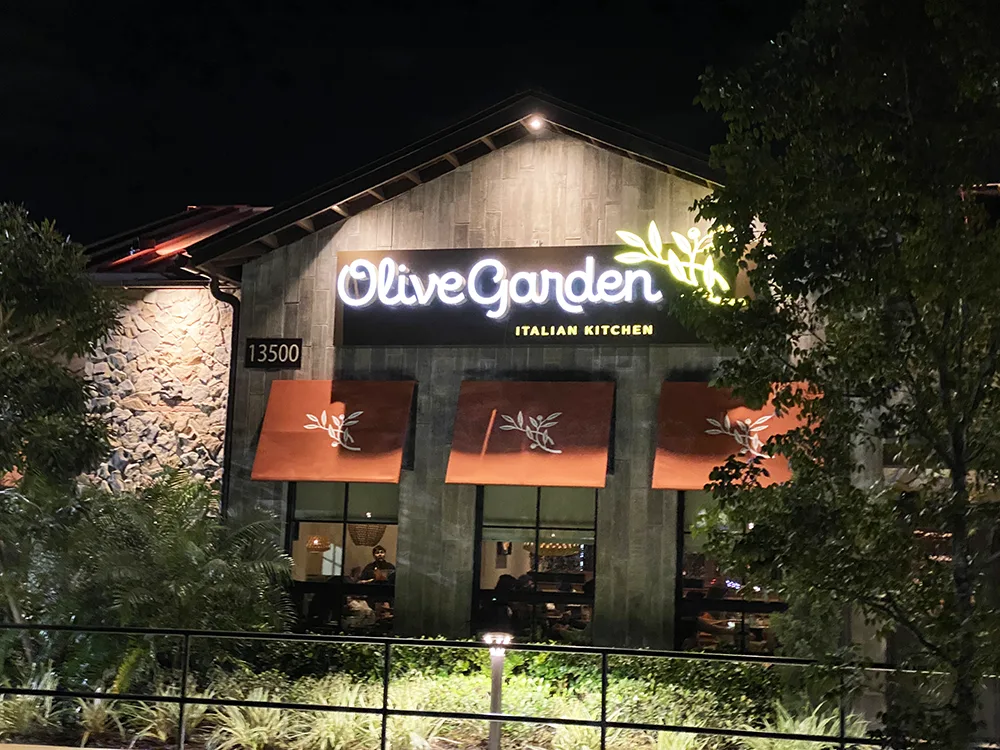
Chicken Alfredo pasta rocketed to the mainstream in the mid-1990s. That’s when Olive Garden launched their grilled chicken and alfredo pasta dish served with a salad and breadsticks. Although the Olive Garden chain launched in 1982 as a big conglomerate’s idea of what an Italian restaurant should be, it was hugely influential on American cuisine. Its menu helped make Italian American dishes more American.
The 1996 introduction of Alfredo Chicken Pasta was both a signal that the dish had entered into national culinary tradition. The dish was and is an inspiration for many other chains and want-to-be chains, for creating their own version of the dish. It’s a safe, simple menu item that is instantly recognizable today, and suggests a dish that is creamy and rich.
Variations of Alfredo Sauce
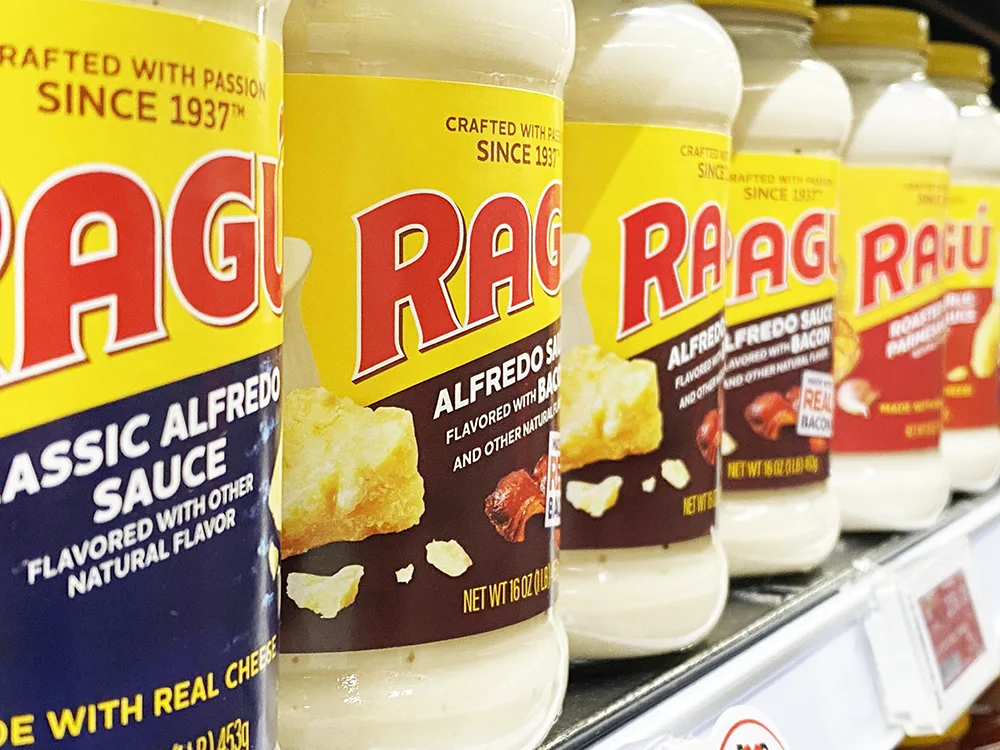
American Alfredo sauce also lends itself to serving as a base for other flavors, similar to how French cuisine relies on Béchamel sauce, a mother sauce for many different types of flavors. Jarred versions of Alfredo sauces now come in varieties like roasted garlic, bacon, Arrabiata, and four cheese.
These new flavors are likely the result of a few commercial choices. Companies that make products like to take up shelf space with different SKUs for better brand recognition and to push out competition. But pasta sauce in general is famously important for offering many choices. Malcolm Gladwell’s 2004 TED Talk explains why sauce companies benefit from having many varieties of a similar product, and how it can expand market share. The explosion of choices for Alfredo flavors may be the direct result of this research.
One common variant blends pesto with creamy Alfredo. Pesto comes from northern Italy around Liguria, and can be made from any number of greens, nuts, and cheese. Jarred versions of Pesto were introduced to the United States in the 1970s, and like Alfredo sauce, was soon used applied as a flavoring condiment to many different foods. The fusion of Alfredo and Pesto seems like a natural extension of mixing and matching flavors on dishes like grilled chicken, pizza, and pasta.
Another popular variation of Alfredo sauce is Cajun Alfredo. Cajun Alfredo uses spices from creole cooking cuisine for a spicier sauce. Advertisements and restaurant write-ups talking about Cajun Alfredo dishes began appearing around 1996 in multiple areas across the country including Florida, California, and Chicago. Notably this is the same year Olive Garden introduced the grilled chicken Alfredo dish as part of its pasta menu.
A cajun-spiced Alfredo sauce would suggest a connection to New Orleans and the fusion of Italian American and creole culinary traditions. And the fact that shrimp Alfredo pasta today is more recognizable as a creamy, parmesan-y pasta dish rather than a scampi-like lemon and wine saute would suggest too that New Orleans cooks had some influence over the dish.
Several sources haves suggested New Orleans is the origin of Cajun Alfredo, but nothing definitively identifies an origin. In the case of cajun Alfredo, it might very well have been the research and development arm of Milwaukee Seasonings, a spice company that is now part of JMH International LLC, a conglomerate based in Utah.
Alfredo dishes were already mainstream in American Italian restaurants by the 1990s, and some might even say by then, Alfredo sauce was starting to go stale. But by 1996, Milwaukee Seasonings had experimented with alternative Alfredo flavorings like “Spanish,” “Tuscan,” and “Cajun” Alfredo. It’s admittedly a bit of a leap to suggest a single source for the many different instances of the dish, but it seems unlikely the result of pure coincidence.
The End Of Alfredo
Alfredo sauce has evolved from a simple butter and cheese pasta into a foundation of many different flavors and recipes. It’s versatile and easily recognized when it appears on a menu. So why is it disappearing from menus?
Alfredo came to signify rich creaminess, a luxury touch to the ordinary. And ultimately that’s what the original recipe from Di Lelio embodied: a simple, home cooked pasta turned into a luscious velvety experience. By lending the name Alfredo to many different dishes, restaurants were signaling to customers that they should expect a rich and creamy dish.
Yet as Alfredo sauce became commonplace, available by the jar, flavoring everything from pizza to sandwiches. The luxury has worn off, losing that special something. New Italian restaurants are no longer offering Alfredo-based dishes, Danny Palumbo observed over at Slate. He cites numerous menu offerings from new, upscale Italian American restaurants – restaurants that are celebrating traditional red sauce dishes.
He’s right, in a way. The 2020s have seen Alfredo fading from menus, replaced with a similarly simple, cheesy sauce. Cacio e Pepe is the flavor of the decade, usurping Alfredo’s place on restaurant menus. Cacio e pepe is a lot like traditional Roman Alfredo Sauce. It’s an emulsion using starchy water, fat from butter, and cheese, flavored with black pepper. No doubt there have been Fettuccine Alfredo dishes with cracked black pepper that resemble modern cacio e pepe.
Although cacio e pepe is an ancient dish, the current obsession can likely be traced to Nancy Silverton’s Osteria Mozza in the mid-2000s. Since then, chefs have experimented with fusing different cuisines, like Dave Chang’s fermented chickpea cacio e pepe at Momofuku Nishi, or imposing the flavor on unrelated dishes like arancini, breakfast sandwiches, risotto, Ramen, lasagna, and more. And for those who think it’s too complicated to make themselves, there’s even a jarred version of cacio e pepe. No doubt in a few years we’ll soon have a native Italian telling American tourists they shouldn’t expect to find cacio e pepe in Rome.