
How Italian Hazelnuts Built an Empire
By Ian MacAllen on Tuesday, January 13th, 2026 at 8:33 pm | 3,810 views
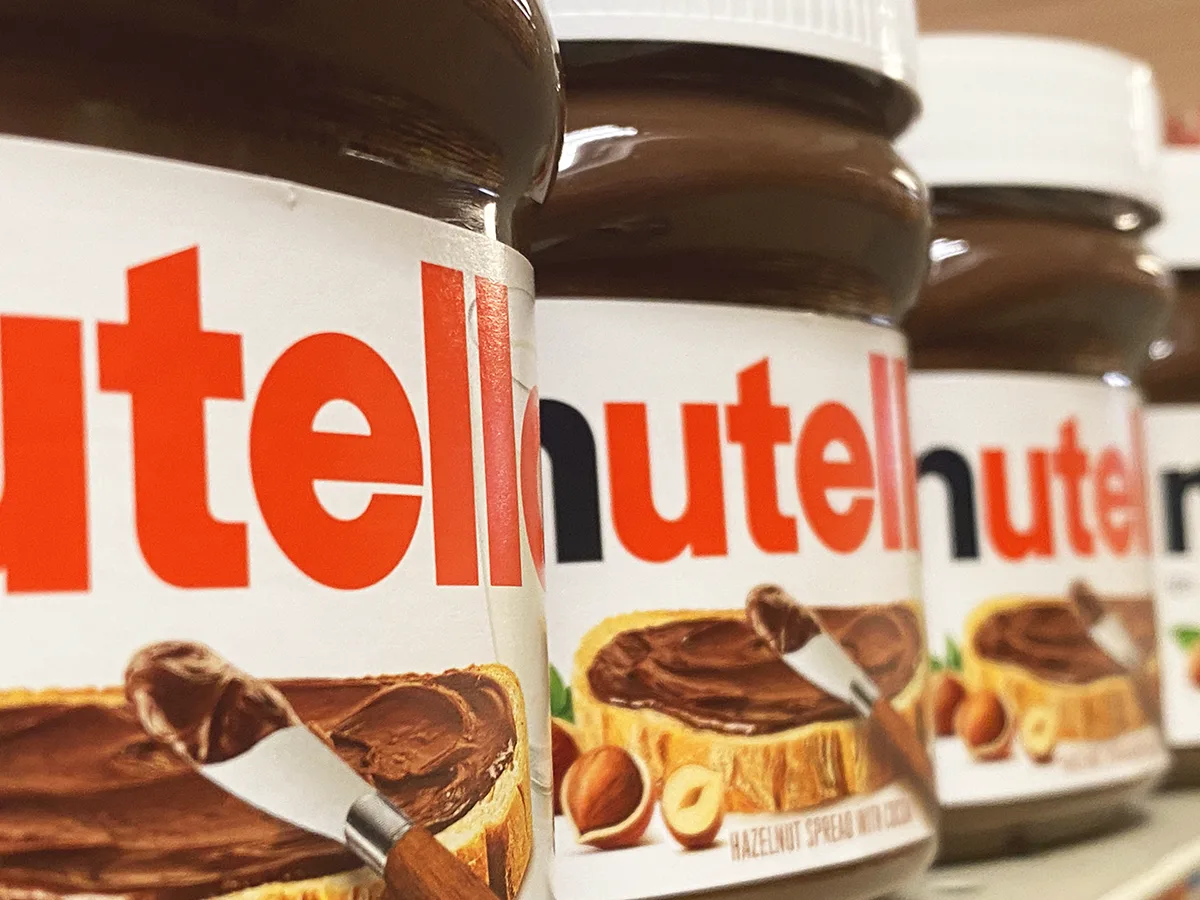
The Ferrero company built a confectionary empire on Nutella spread, now ubiquitous around the world. But as far as chocolate treats, Nutella is a relatively recent invention created decades after competitors like Cadbury, Hershey, and Nestle. So how did this nutty spread go from odd ethnic condiment to household staple?
The Chocolatey Origins of Nutella
Chocolate was first introduced in Italy in the city Turin in the middle of the 16th century when the Duke of Savoy, who ruled over Piedmont, married the daughter of Philip II of Spain. The Spanish Empire brought cacao from the New World to Europe. This early chocolate was consumed as a liquid.
By the 17th century, chocolate production licenses were issued in the city by royal permission. The licenses established chocolate houses helped control quality and establish a chocolate industry that by the 18th century would become well known across Europe.
Then the Napoleonic Wars broke out across Europe. The conflict would change Italian confectionery forever. In 1802, the French annexed the Piedmontese Republic, a newly formed state that had emerged during the political instability at the end of the 18th century. Four years later, Napoleon created a blockade against the British Empire. The Continental System forced trade among European member states, and prohibited trade with the British in an attempt to deprive them of income.
The effect on northern Italy was a shortage of imported cacao necessary for chocolate production. That’s when chocolatiers in the city turned to locally produced hazelnuts to help stretch their limited supplies of cacao. Known as gianduia or gianduja, the new confectionery was made from a combination of cacao and hazelnut paste.
The new treat continued to be refined through the 19th century. Giacomo Martino Bianchini, who founded a chocolate factory in 1820 created a hydraulic machine to mix the gianduia. On his death in 1837, Paolo Caffarelli, born Pierre Paul Caffarel, a manager in the company, took over production. He created the Caffarel Company, now still a major Italian candy company. There’s an interesting look at the history and evolution of their company logo at the Museo del Marchio Italiano.
The Caffarel company refined the process further in 1852. Caffarel is likely to have collaborated with chocolatier Michele Prochet on revising the recipe, though not everyone can agree on this point. The main change at this time was that the toasted hazelnuts were ground more finely than the previously chopped nuts, producing a smoother chocolate product.
According to Let’s Eat Italy!, the small chocolates were originally named givu, meaning “cigar butts,” but were later called gianduiotto after a character from Commedia dell’Arte. These became popular during Carnevale around 1865 and were individually wrapped in foil.
The Invention of Nutella
Gianduia became a staple of the Piedmont region, in part because the area was a leading producer of hazelnuts. The local ingredient became common in cooking and desserts. But then the onset of World War II in the 1940s created another chocolate shortage.
That’s when Pietro Ferrero began selling Pasta Gianduja, meaning “Gianduja paste”. His first recipe was similar to other versions of gianduia popular in the region selling loaves wrapped in foil. He managed to reduce the cost of his product though by reducing the volume of cacao in his recipe. When Ferrero started selling his gianduja paste, that the same volume of chocolate cost six times as much as the Pasta Gianduja, according to The Oxford Companion to Sugar and Sweets.
Pietro founded the Ferrero Company in 1946 in order to sell his paste, but three years later, died suddenly. He left the business to his son Michele, then in his mid-20s. Ferrero continued selling Pasta Gianduja, but also became a confectionary legend himself overseeing the production of numerous innovations. Perhaps the most important invention was the creation of a spreadable gianduja.
One legend suggests that during a production accident, the hazelnut paste was accidentally combined with additional cacao butter, creating a smooth spreadable consistency. Another possible origin could have been an intentional experiments to create a more spreadable paste inspired by melting chocolate. According to Luca Cottini, a professor of Italian in Villanova University’s College, contends that when Ferrero began selling the pasta gianduja in southern Italy, where temperatures were warmer, the chocolate would often melt leading consumers to spread the softer chocolate on bread to prevent it from going to waste.
Whether an accidental creation or intentional experiment, La Suprecrema was launched in 1951. It was inexpensive luxury, spreadable like American peanut butter, and flavored like chocolate.
A decade later, the popularity of Supercrema drove further innovation. Michele oversaw a recipe adjustment adding palm oil to allow the product in order to scale up production. With the new recipe, he created a new name: Nutella. According to Luca Cottini the name was developed in response to restrictions Italy imposed in 1962 on using prefixes like “Super” or “extra.” Since the goal was exporting the product, the suffix “ella” was chosen to mimic the sound of recognized Italian products like Mozzarella, and the English word “Nut.”
Nutella Conquers the World
Nutella proved a hit in Italy and parts of Europe where the spread was exported, but remained relatively unknown outside of the distribution region. Meanwhile, Michele Ferrero was a prolific candy maker overseeing the creation of new production lines.
Among the more famous products was the Refreshing Mints, launched in 1969. A year later they renamed it Tic Tacs creating a now iconic brand. The breath mints were soon exported to Europe and the United States and new flavors added through the 1970s.
The company also launched the Kinder brand in the 1960s to cater directly to children. It launched in 1968 in Italy and Germany, and developed now famous products like Kinder Eggs that bundled toys in chocolate eggs, which are banned in the United States. Kinder products also started using Nutella paste in cookie recipes.
Another product Michele Ferrero developed in the 1960s was Pocket Coffee. These chocolates are filled with delicious espresso with the intention of targeting late night workers who wanted a jolt of coffee. The remain seasonal and more difficult to find.
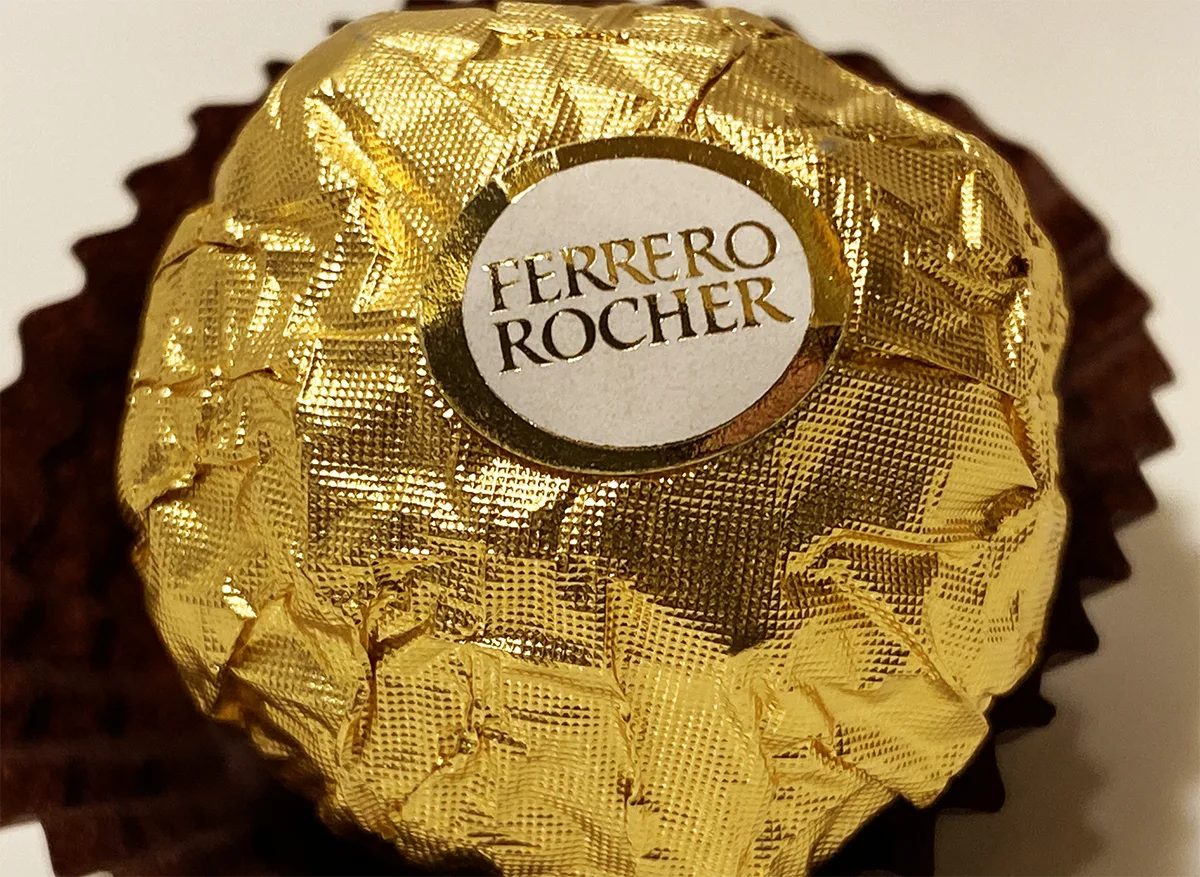
Then came another innovation with the 1982 introduction of Ferrero Rocher. These chocolate confectionaries are wrapped in gold foil and include a chocolate and hazelnut shell around a toasted hazelnut and a creamy, Nutella ganache. They also proved a pivotal tool when it came to expanding in China.
Conquering the Chinese market was the white whale of the big candy companies. China limited western companies from importing goods, but at the end of the 1970s, began liberalising their economy. In Chocolate Fortunes, Lawrence L. Allen explores the story of how the big five chocolate producers – Hershey, Nestle, Cadbury, Mars, and Ferrero – opened up the Chinese consumer market to western chocolate. In the case of Ferrero, the company exploited their Ferrero Rocher chocolate line. The gold-wrapped candies in a fancy gift box became a symbol of luxury as Chinese consumers began to spend money on imported products.
Nutella arrived in the United States in 1983, first in the northeast where large populations of Italian immigrants and their descendents resided. It remained something of an ethnic product for years, even in Italian enclaves. Nutella may have remained a niche product, a souvenir Americans brought back from Europe, had it not been for a food blogger.
In 2007, blogger Sara Rosso decided to launch the first World Nutella Day, a celebration of the chocolatey spread. Rosso and her friend Shelley Ruelle, another blogger, created the event with a website celebrating Nutella recipes. A decade ago, she wrote up the story of how Nutella Day came into existence. Ferrero has since joined in the celebration recognizing February 5th as the official Nutella Day.
Rosso believes the event helped fuel the modern obsession with all things Nutella, though without access to Ferrero’s sales data, she can’t be sure. And sure, Nutella is everywhere now, including products that are from Ferrero, but also in baked goods, gelato, crepes, and dessert recipes in
However, the growth of Nutella also likely has to do with the growth of Ferrero’s global footprint as a multinational conglomerate. As of 2025, Ferrero is the third largest candy company in the world, bested only by Mondelez and Mars, and surpassing Nestle and Hershey. In part, their portfolio of products like Nutella and Kinder have proven popular, but they have also grown through acquisitions. The company is integrating vertically, purchasing hazelnut suppliers like Turkey’s Oltan Group. Ferrero has also bought up other candy companies, like Nestle’s Us Confectionery portfolio including popular brands like Butterfinger, and the Italian American candy company Ferrera, maker of products like Nerds. Earlier in 2025, Ferrero acquired Kellogg, the US cereal and snack maker, for $3.1 billion.
Nutella’s Insatiable Demand and Looming Shortages
Building an empire on a hazelnut spread has meant that Ferrero’s demand for hazelnuts has outstripped Piedemont’s ability to supply the raw material for global operations. In part this explains the 2014 acquisition of the Oltan Group, which supplies hazelnuts in Turkey.
Now though, global hazelnut production is threatening Nutella supplies. Turkey normally produces 600,000 to 700,000 tons of hazelnuts, about 2/3 of the world’s supply. Much of that harvest ends up in Nutella. But in 2025, the country’s output is down, Turkey Today reports, with some estimates indicating half as much production, creating chaos in the hazelnut market. As prices rose, Ferrero stopped buying hoping to hold out for more stable prices.
The shortages might eventually cause Nutella prices to rise, which is ironic given that the product was created as an alternative to high-priced chocolate.
But it’s not just hazelnut shortages that may cause problems for nutella. Currently there is a global cocoa production crisis creating skyhigh prices for chocolate. Many American candy bars have begun reducing the amount of chocolate that they can no longer even be called chocolate. A combination of labor conditions and climate change are increasing costs for cocoa production, leading to rising prices and overall shortages.
To head off some of these problems, in 2017, Nutella changed the spread’s recipe. As with the New Coke fiasco, fans say the new formula simply isn’t as good. And the American Nutella formula has been said to be different from that sold in Europe too.
One solution to the rising price of hazelnuts and chocolate could be a new product launched in 2025. Nutella Peanut flavor took five years to develop, according to Food & Wine, and is designed to cater to Americans who eat peanut butter. As the French say, “Très américain”.